
The “centrality” of an incarcerated individual’s religious beliefs about dietary choices should not be second-guessed by courts, as long as those beliefs are sincerely held, the Ninth Circuit concluded this week in Harris v. Cleric Muhammad, 24-3307.
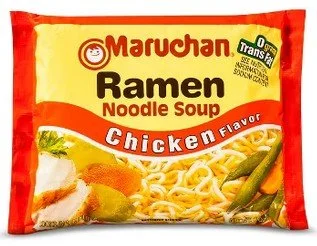
A Noodly Issue: Ramen may or may not be a perfectly “clean” food, but it may nevertheless be part of a sincerely held religious Buddhist belief in a diet that requires eating “clean.”
The appellant in Harris is a Nichiren Buddhist who has a sincere belief in the need to eat “cleanly,” and he had been approved for a halal diet that was an approximation of the “clean” diet he wished to maintain. However, since the halal diet was not always exactly consistent with his dietary needs, Harris also sometimes purchased non-halal food, including ramen that contained processed ingredients, from the prison commissary.
Noting these purchases, which did not seem particularly “clean,” the prison kicked Harris off of the halal diet program, though he asserted that “ramen soups are such a staple in Nichiren Buddhist culture that adherents promulgate, and work, in ramen restaurants.” Harris sued under Religious Land Use and Institutionalized Persons Act (RLUIPA), seeking an injunction. The District Court had concluded that he was unlikely to succeed on the merits.
In a nutshell, the RLUIPA says that if a government practice “substantially burdens” the religious exercise of a prisoner it must both further a “compelling” governmental interest and be the least restrictive means of furthering that interest. The district court concluded that Harris had failed at the outset to show substantial burdening of his religious exercise since the halal diet did not entirely fit with the needs of Nichiren Buddhism anyway, and thus that the exclusion from the halal program did not affect his ability to eat the way he desired.
The Court of Appeal views it differently, stating:
it is for Harris to determine whether being on [the halal diet] satisfies Harris’s Nichiren Buddhist beliefs. And if external forces cause Harris to fall short of the exact dictates of his religion, it is for him and his conscience, not us as courts, to decide what compromises are appropriate.
The Court of appeal agrees that there may be issues in some cases as to whether a given set of beliefs is “sincerely” held, and that, for example, “RLUIPA does not entitle insincere believers in the ‘Church of Surf ‘n’ Turf’ to luxury lobster and steak dinners.” But the analysis of “sincerity” of beliefs is different from the analysis of the “centrality” of those beliefs: the former may be scrutinized by the courts, whereas the latter may not.
The Court of Appeal further notes that it is still an unresolved question in this case whether the prison’s administration of its various dietary programs is the least restrictive means of furthering its compelling interests. Maybe it is, maybe it isn’t: that’s for the District Court to determine on remand. But Harris at least is able to make out the prima facie case of having a sincere religious exercise that is burdened by the prison’s policy prohibiting him from supplementing the halal diet.
Related Post: RLUIPA Overview
For free consultation about potential civil rights cases, call today.