
California’s Tom Bane Act, California Civil Code § 52.1, makes it illegal to interfere by threat, intimidation, or coercion, or attempt to interfere by threats, intimidation, or coercion, with the exercise or enjoyment by any individual secured by the Constitution or laws of California.
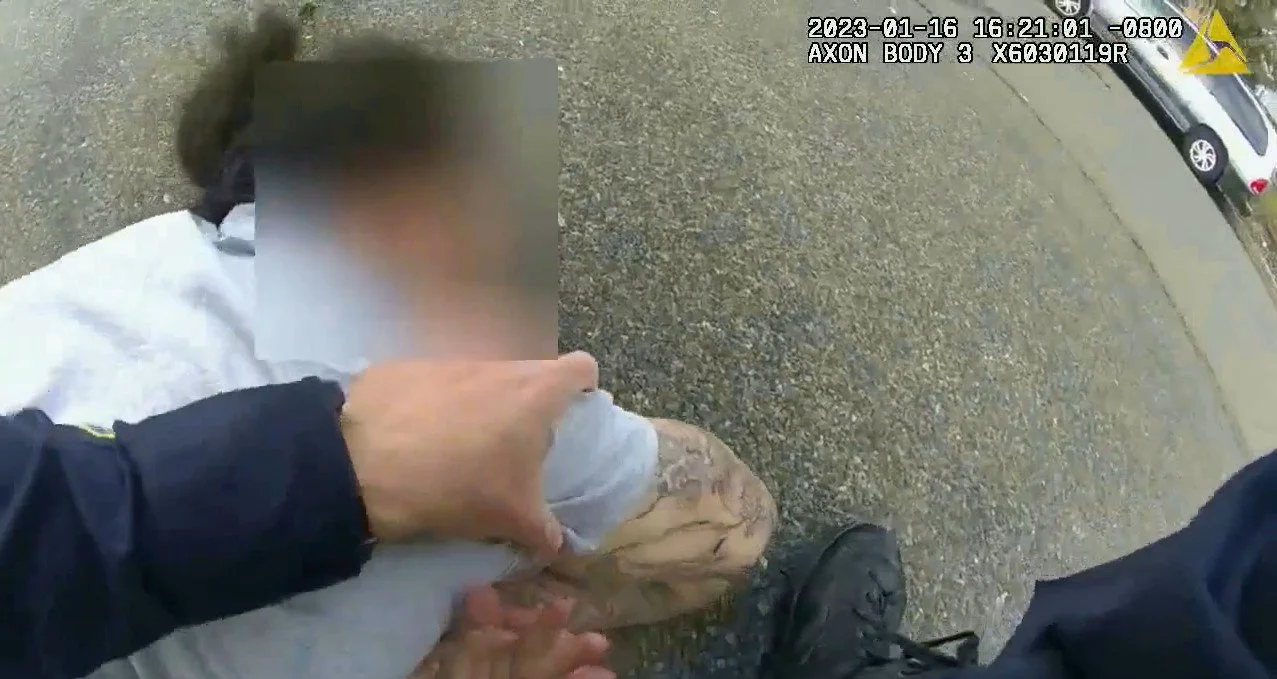
Hands On: The use of force, as in this clip from a San Diego case, can give rise to a cause of action under the Bane Act.
The essence of a Bane Act claim is that the defendant, by improper means, “tried to or did prevent the plaintiff from doing something he or she had the right to do under the law or to force the plaintiff to do something that he or she was not required to do under the law.” Austin B. v. Escondido Union Sch. Dist., 149 Cal. App. 4th 860, 883 (2007)
The most obvious applications of Bane Act claims occur when physical force or other forms of coercion are used to violate a person’s rights, and Bane Act claims are often brought as a California-law counterpart to a claim of excessive force under federal law. “Mere words” are typically not enough to be the basis for a claim, though if the words involve a threat of violence or arrest they can be sufficient. See, e.g., Cuviello v. City & Cty. of San Francisco, 940 F. Supp. 2d 1071, 1103 (N.D.Cal. 2013). Additionally, “retaliatory actions may be sufficient to state a Bane Act claim based upon coercion or intimidation.” N.M. v. Ramona Unified Sch. Dist., No. 24-cv-2306-BJC-MSB, 2026 U.S. Dist. LEXIS 46893 at * 18 (S.D.Cal. March 6, 2026) ; Bailey v. Shasta Union High Sch. Dist., No. 2:23-cv-01750-KJM-DMC, 2024 U.S. Dist. LEXIS 210247, at *7 (E.D. Cal. Nov. 18, 2024).
The Bane Act is interpreted as having a “specific intent” component that has been the subject of a great deal of debate. That intent component, however, does not require an intent to violate the law: “A reckless disregard for a person’s constitutional rights is evidence of a specific intent to deprive that person of those rights.” Reese v. Cty.of Sacramento, 888 F.3d 1030, 1045 (9th Cir. 2018). The intent component also does not “require a showing that a defendant knew he was acting unlawfully; reckless disregard of the ‘right at issue’ is all that is necessary.” Luttrell v. Hart, No. 5:19-CV-07300-EJD, 2020 U.S. Dist. LEXIS 173856, 2020 WL 5642613, at *5 (N.D. Cal. Sept. 22, 2020) (citation omitted).
In a custodial setting like a jail or prison, “deliberate indifference” — the same mental state that needs to be established to make out an Eighth or Fourteenth Amendment claim — will also satisfy the specific intent component of the Bane Act. Cornell v. City and County of San Francisco, 17 Cal.App.5th 766, 802, n. 31 (2017). As discussed elsewhere on this blog, the Eighth Amendment version of deliberate indifference requires a “subjective” showing of intent, whereas the Fourteenth Amendment version of deliberate indifference that applies in situations involving pretrial detainees is satisfied by a less demanding “objective” showing. This less-demanding “objective” form of deliberate indifference is sufficient to satisfy the intent component of the Bane Act. See Est. of Hernandez v. San Diego County, 24-cv-00032-DMS-DEB at * 25-26 (S.D.Cal. Sept. 30, 2024) (“the Court has determined that the Complaint alleges a claim under the objective deliberate indifference standard. [Citation.] Thus, the Complaint states a Bane Act claim against Defendants”).
An interesting aspect of Bane Act claims, compared to claims brought under 42 U.S.C. § 1983, is that the Bane Act statute contains no requirement of acting “under color of law.” See Jones v. Kmart Corp., 17 Cal. 4th 329, 333-334 (1998) (“there is no state action requirement per se” in the language of the Bane Act). In other words, the Bane Act can apply to the actions of private actors, not just folks in government.
Bane Act claims are also not subject to the regime of “qualified immunity” that can make federal civil rights litigation so vexing and unpredictable. However, as with other claims brought under California law (as opposed to under federal law), Bane Act claims need to be set up correctly by filing a government tort claim and receiving a turndown of that claim prior to heading to court.
For free consultation about potential civil rights cases, call today.